Thailand’s “Monarchized Military”: Paul Chambers Examines the Monarchy–Military Nexus and Its Political Consequences
In an online lecture held on 13 October 2026, Dr. Paul Chambers examined the close relationship between Thailand’s monarchy and military, describing it as a “monarchized military.” He argued that royal endorsement, military patronage networks, and institutional autonomy have enabled the armed forces to maintain political influence despite the return of electoral politics. He also discussed how the 2025 Thai–Cambodian border conflict strengthened the military’s public standing and how royal control over selected security units has become more centralized under King Vajiralongkorn. Chambers concluded that these interconnected structures remain significant obstacles to democratic reform and effective civilian control of the military.
October 14, 2026
On 13 October 2026, Dr. Paul Chambers of Oklahoma University delivered an online public lecture examining the enduring political influence of Thailand’s armed forces and their relationship with the monarchy. Entitled “Thailand’s Influential Military,” the lecture was organized jointly by the Association for Thai Democracy, Engage Thailand, Thais for Human Rights and Democracy, 112Watch, and the Southeast Asian Research Group at UW–Madison. The event took place on the tenth anniversary of the passing of King Bhumibol Adulyadej, providing an occasion to reflect on the evolution of the monarchy–military relationship and its implications for Thailand’s political future.
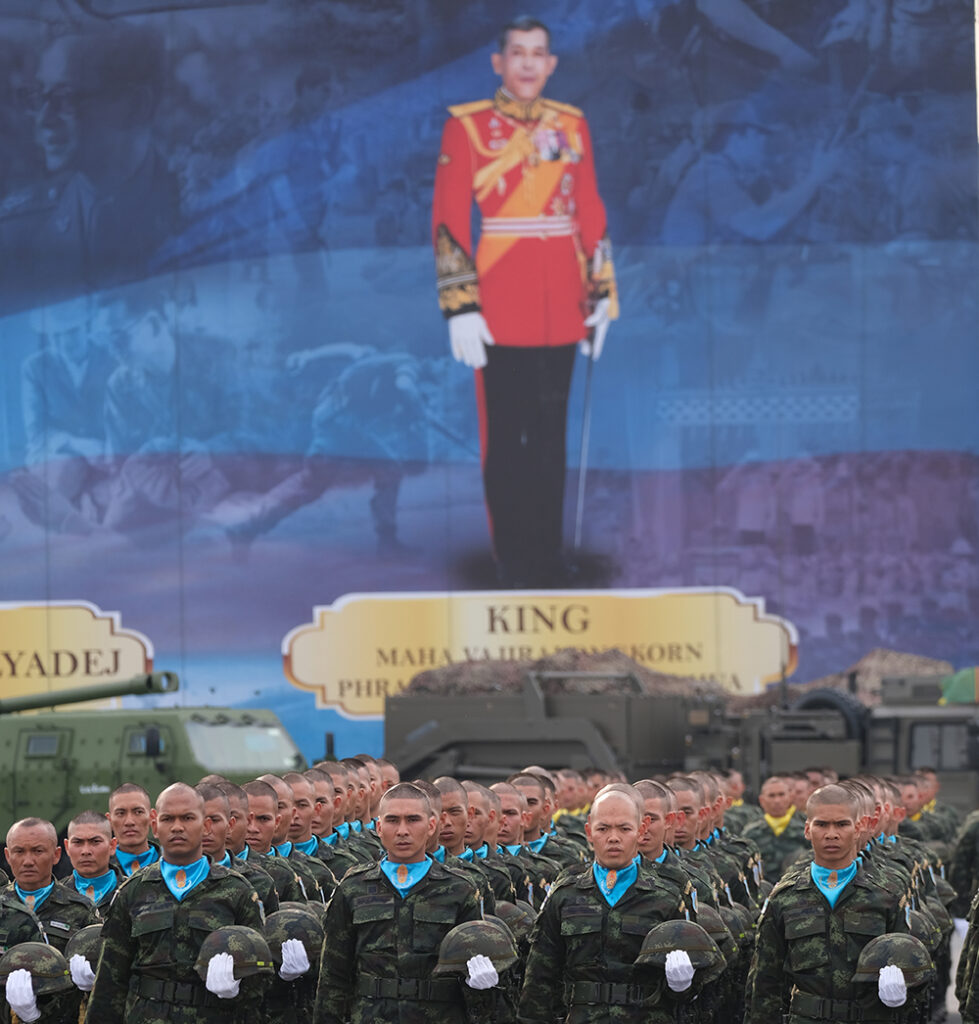
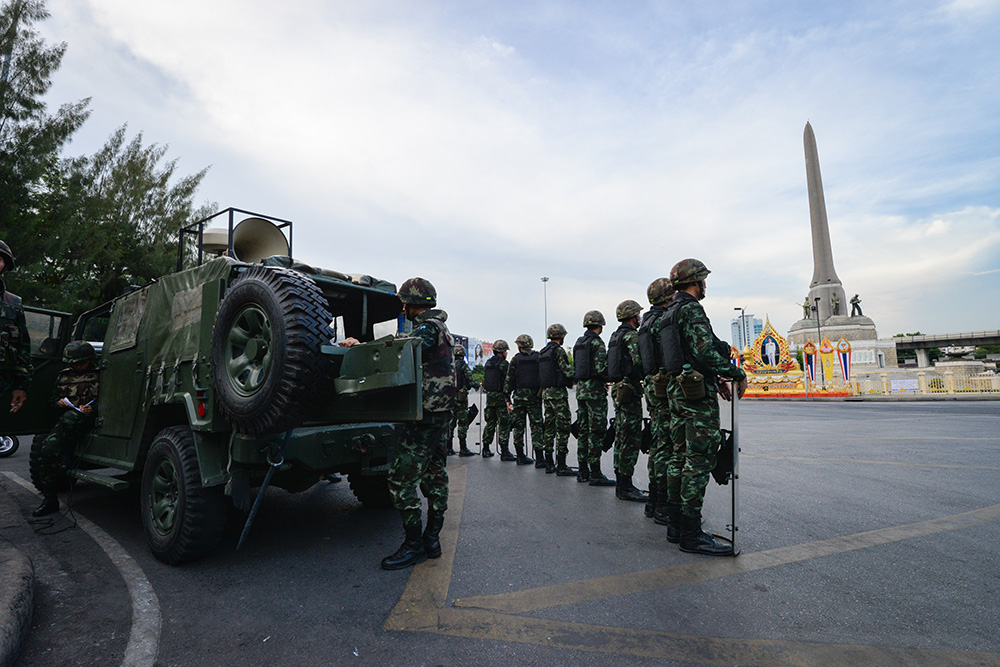
Central to Chambers’s presentation was the concept of a “monarchized military,” which he used to describe the close and mutually reinforcing relationship between the armed forces and the monarchy. In his analysis, the military’s political influence cannot be understood independently of the royal institution. The armed forces help protect the monarchy and sustain its authority, while royal endorsement provides legitimacy for military intervention and political power. Chambers argued that this relationship has been particularly consequential since 1980, maintaining that no successful military coup since that year has taken place without the king’s endorsement.
The relationship, however, has evolved across successive reigns. Under King Bhumibol Adulyadej, the monarchy played a role in balancing competing military factions while allowing influential army commanders considerable political latitude. Under King Vajiralongkorn, Chambers argued, the relationship has become more centralized, with the palace exercising more direct control over selected security units. This shift, he suggested, reflects an effort to consolidate royal authority over strategically important elements of the armed forces.
The Military’s Enduring Influence over Thai Politics
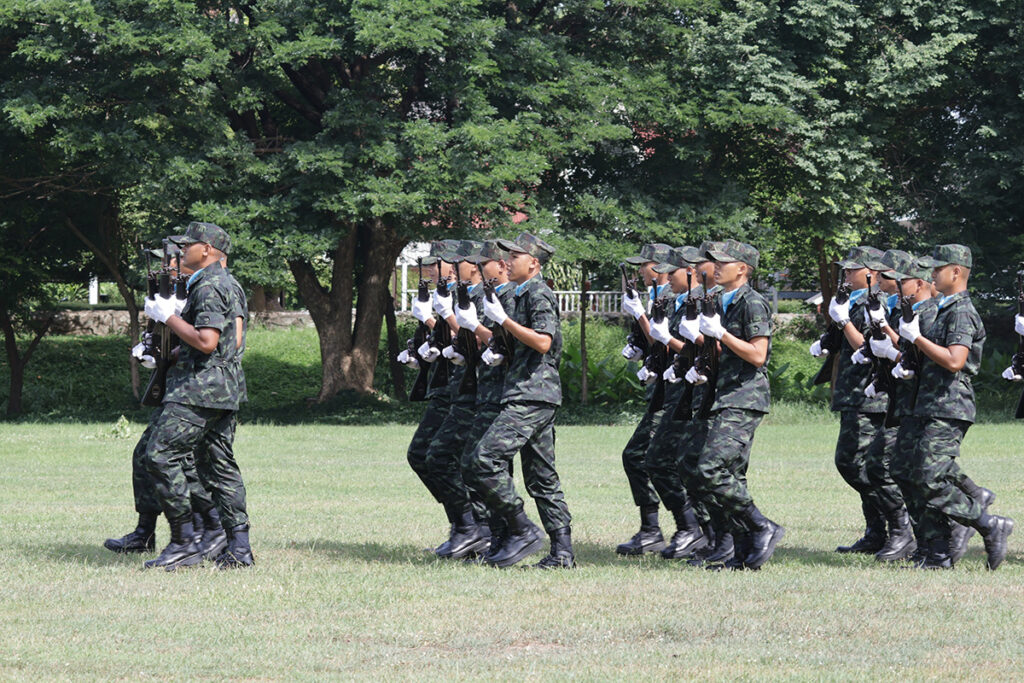
Chambers placed the contemporary military–monarchy relationship within the broader history of Thai political development since the end of absolute monarchy in 1932. He counted 14 overt military coups during this period, emphasizing that the armed forces have repeatedly intervened in politics and remained influential even during periods of electoral government.
Following the violent crackdown of Black May in 1992, Thailand entered what Chambers characterized as a period of “guided democracy.” Although electoral politics continued, the monarchy and military retained considerable influence behind the scenes. This arrangement came under growing pressure after Thaksin Shinawatra won the 2001 general election. Thaksin sought to expand his political influence within state institutions, including the police and armed forces, challenging established elite networks. Chambers identified these tensions as an important factor leading to the military coup of 2006.
The military-backed political order that followed the coup was accompanied by institutional changes that strengthened the armed forces’ autonomy. The 2008 Defence Act expanded the authority of senior military officials over officer reshuffles and established a Defence Council dominated by military personnel. These arrangements reinforced the military’s ability to manage its internal affairs and influence the appointment and promotion of its officers.
Another important development was the revival and strengthening of the Internal Security Operations Command (ISOC) under the Internal Security Act. Chambers described ISOC as a powerful security institution with extensive responsibilities covering intelligence, counterinsurgency, and internal security. Its broad mandate, he suggested, gave the military an institutional presence that extended well beyond conventional defence functions.
The 2014 coup and the military government that followed further weakened democratic institutions. The 2017 Constitution subsequently reintroduced an appointed Senate and imposed constraints on political parties, helping preserve military influence after elections resumed. In 2019, the military-backed Palang Pracharath Party played a central role in enabling former coup leader Prayut Chan-o-cha to remain prime minister. The limits of electoral competition became apparent again following the 2023 general election, when Move Forward emerged victorious but its leader, Pita Limjaroenrat, was prevented from becoming prime minister. For Chambers, this episode illustrated how electoral victories can be obstructed by Thailand’s broader political and institutional arrangements.
Anutin’s Government and the Military’s Renewed Political Standing
Turning to contemporary politics, Chambers characterized Prime Minister Anutin Charnvirakul as a “status quo agent” rather than a political leader seeking to strengthen civilian oversight of the armed forces. In his assessment, Anutin’s government has largely accommodated the military’s institutional interests and preserved its established privileges.
The Thai–Cambodian border conflict in 2025 represented a significant turning point in this relationship. According to Chambers, the military regained some of its public standing after its reputation had suffered during the military government of 2014–2019. He cited polling indicating that 62.5 per cent of respondents placed the greatest trust in the military to resolve the border crisis. The growth of nationalist sentiment during the conflict, he argued, also created opportunities for the armed forces to reinforce their political influence.
These developments unfolded against the backdrop of controversy surrounding former prime minister Paetongtarn Shinawatra’s telephone conversation with Cambodian leader Hun Sen and her subsequent removal from office. Chambers argued that Anutin subsequently allowed the military considerable latitude in several important areas of national policy. These included defence spending and procurement, military influence over the National Security Council, border policy, conscription, military business interests, and the preservation of laws that protect the armed forces’ institutional autonomy, particularly the Internal Security Act.
Chambers suggested that this accommodation serves Anutin’s political interests as well as those of the military. By respecting the armed forces’ institutional prerogatives and allowing them to retain influence over security affairs, the prime minister can reduce the risk of military intervention while benefiting from the institution’s renewed public popularity. The arrangement therefore illustrates how civilian governments may rely on accommodation rather than confrontation when dealing with a politically powerful military establishment.
Military Factions, Personal Loyalties, and Patronage Networks
Beyond the formal relationship between the monarchy and the armed forces, Chambers devoted considerable attention to the informal networks that shape military careers and political influence. Military factions, he explained, often develop around particular units, classes of military academies, regional backgrounds, and personal relationships. These connections can influence appointments, determine promotion prospects, and help officers consolidate their positions within the military hierarchy.
One network highlighted in the lecture was Pre-Cadet Class 26, whose members occupy several senior positions in the military and security establishment. Chambers discussed the influence of Army Commander General Phana Klaewplodthuk in placing members of his class in leadership positions and developing connections with the younger Pre-Cadet Class 28. Such relationships, he argued, help strengthen internal cohesion and shape the distribution of power within the armed forces. The October 2026 military reshuffles provided a contemporary illustration of how personal networks can influence appointments even under a government that is formally civilian.
Chambers also examined the emergence of the Kor Daeng, or “red-neck,” faction in 2018. The group was formed in an effort to bring officers favoured by the palace together within a more unified network. Officers who were excluded from this circle became associated with the Kor Khiao, or “green-neck,” faction. Although the strategy initially helped consolidate palace influence over selected groups of officers, it also generated resentment among those left outside the network. Over time, these tensions contributed to shifts in the balance between competing military factions.
Geography and command structures also play an important role in determining the military’s political significance. Chambers singled out the First Army Region, which is responsible for Bangkok and central Thailand, as particularly important because of its strategic position during potential coups. He also pointed to changes in military unit structures and the designation of additional units as royal guard forces as indications of efforts to bring selected elements of the armed forces under more centralized royal control.
Together, these examples demonstrate how the military’s internal organization operates through a combination of formal hierarchy and informal patronage. Institutional authority, personal loyalty, and access to the palace can all influence the distribution of power within the armed forces.
The Palace’s Expanding Influence over Security Institutions
The Royal Security Command featured prominently in Chambers’s account of the changing monarchy–military relationship. He described the institution as a crucial link between the palace and the armed forces, particularly following the transfer of the First and Eleventh Infantry Regiments into its organizational structure. These transfers placed important military units under direct royal control.
Chambers suggested that the broader objective was to ensure that an increasing number of forces stationed in Bangkok would fall under the palace’s authority. Given the capital’s strategic importance during periods of political unrest and military intervention, the reorganization of these units has implications that extend beyond ceremonial or personal security functions.
Senior officials with military backgrounds also serve as intermediaries between the palace and the armed forces. Chambers highlighted General Apirat Kongsompong and General Satitpong Sukvimol, as well as General Chakrapop Pudidet, who holds a senior position in the Royal Security Command. He further noted that 10 of the 20 members of the Privy Council are retired senior military officials. This composition, in his analysis, underscores the depth of the institutional connections between the monarchy and the military establishment.
Nevertheless, Chambers cautioned against assuming that the expansion of royal control over selected units means the entire armed forces have come under direct palace command. The Royal Security Command remains relatively small compared with the regular military. While the transfer of particular units represents an important consolidation of royal authority, extending that level of control across the whole armed forces would constitute a considerably larger undertaking.
The distinction is significant. The monarchy–military relationship involves both cooperation between institutions and efforts to centralize authority over particular elements of the security apparatus. These processes can reinforce one another, but they do not necessarily eliminate competing interests within the military.
The Future of the Monarchy–Military Partnership
During the question-and-answer session, Chambers considered several factors that could place pressure on the existing partnership. One potential source of tension would emerge if the palace increasingly demanded actions that military officers opposed. Although the monarchy and armed forces have overlapping interests, their relationship should not necessarily be understood as free from internal disagreements. Conflicts over policy, appointments, or the exercise of authority could expose differences that are currently managed through institutional cooperation and personal networks.
Chambers also raised the possibility that the military may increasingly seek to protect its interests through political parties and electoral competition rather than through coups. Military interventions have become unpopular, making alternative strategies for retaining political influence potentially more attractive. Participation in electoral politics, whether directly or through supportive parties and political alliances, could allow the armed forces to preserve influence without assuming the full political costs of another coup.
The succession question may also affect the future balance of power. Chambers observed that senior figures in the Privy Council and Royal Household are aging. A future successor who does not possess the same degree of authority as the current king could create an opportunity for the military to exercise greater independent influence. Under such circumstances, the existing relationship might be renegotiated, with the armed forces seeking to expand their autonomy rather than remain subordinate to a more centralized royal security structure.
Geopolitical competition between the United States and China represents another possible source of leverage for the military. Chambers argued that concerns about potential Chinese military bases in Laos or Cambodia could be used to justify higher defence spending and reinforce the claim that the armed forces are indispensable to national security. Whether such concerns translate into specific policy changes would depend on regional developments, but the broader point is that external security threats can strengthen the domestic political position of military institutions.
Chambers also discussed the public presentation of Queen Suthida as a military pilot. In his interpretation, this serves both the king’s personal interests and the palace’s broader objective of reinforcing ties between the monarchy and the armed forces. Such representations help communicate the close association between the royal institution and military identity, further embedding their relationship within public understandings of national security and authority.
A Structural Challenge to Democratic Reform
Chambers’s lecture ultimately highlighted the extent to which the Thai military’s political influence extends beyond its formal responsibilities for national defence. Its relationship with the monarchy, internal patronage networks, control over important appointments, institutional autonomy, and ability to capitalize on nationalist sentiment combine to sustain its position within the political system.
The monarchy–military relationship is therefore not simply a matter of royal endorsement of individual coups or the military’s protection of the royal institution. It is also embedded in legislation, command structures, personnel networks, security organizations, and the political calculations of civilian leaders. These overlapping arrangements help explain why the return of elections has not necessarily translated into effective civilian control of the armed forces.
The central question raised by Chambers’s analysis is whether Thailand’s political institutions can move towards a system in which the military is subject to meaningful civilian oversight and the armed forces’ role is confined more clearly to their professional security responsibilities. The persistence of military influence across successive governments suggests that electoral competition alone has not resolved the underlying institutional imbalance.
Ten years after the passing of King Bhumibol Adulyadej, the monarchy–military relationship remains central to understanding Thailand’s political trajectory. The transition from King Bhumibol to King Vajiralongkorn has brought changes in the organization and centralization of royal authority, but it has not removed the armed forces from the heart of political life. As Chambers’s lecture made clear, any serious discussion of democratic reform in Thailand must therefore consider not only the military’s direct interventions in politics, but also the networks, institutions, and royal relationships through which its influence continues to be reproduced.

Note: The original version of this report was composed by Engage Thailand. 112WATCH wishes to thank Engage Thailand and other partner organisations: the Association for Thai Democracy, Engage Thailand, Thais for Human Rights and Democracy, 112Watch, and the Southeast Asian Research Group at UW–Madison—for organising this important event.